Mouse Pad Fairy Butterfly: A Creative Addition to Your Workspace – But Only If You Avoid These Missteps
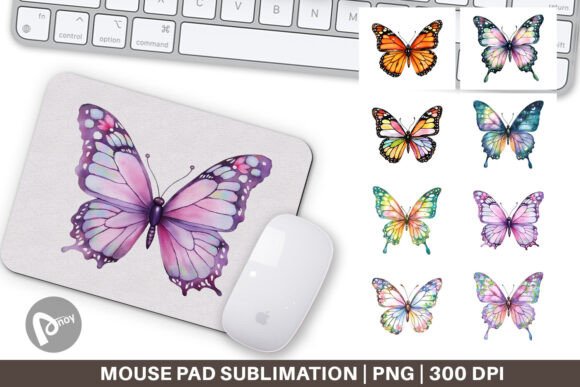
There’s a quiet magic in sitting down to a desk that feels truly yours. A well-chosen mouse pad does more than protect your surface – it can influence your mood, help you stay focused, and even spark creative thinking. The Mouse Pad Fairy Butterfly design taps into that desire. With eight delicate, high-resolution PNG files (each 9.5 x 8.1 inches at 300 dpi), it gives you the artwork to craft a sublimation mouse pad that blends whimsical nature with professional or gaming aesthetics. Yet what looks like a straightforward digital purchase can quickly turn into a series of avoidable headaches if you’re unprepared. This isn’t a finished product that arrives at your door; it’s a creative tool, and like any tool, it works best when you understand how to handle it properly.
Before You Click Download: Understanding Exactly What You Receive
The biggest misunderstanding starts at the listing itself. You are purchasing digital files – eight beautifully illustrated butterfly and fairy-themed PNGs designed for sublimation printing. There is no physical mouse pad, no pre-printed fabric, and nothing that can be used directly without additional materials and equipment. Many buyers skip this detail, assuming the price reflects a ready-to-use accessory. When the download arrives, confusion sets in. They try to print on photo paper, or they resize the artwork arbitrarily and wonder why the result looks nothing like the vibrant preview.
Before you even consider downloading, ask yourself: Do you have access to a sublimation printer and a heat press? If not, do you have a reliable print-on-demand partner or local shop willing to do a single custom job? A better approach is to treat the PNG files as raw creative ingredients. They are stellar ingredients – the 300 dpi resolution and specific dimensions are ideal for standard rectangular desk mats – but they need the right recipe. If you’re not equipped, factor in outsourcing costs upfront, or use this as the nudge to finally invest in that sublimation setup you’ve been eyeing.
The Tempting Mistake of Treating It Like a Standard Print
One of the most common slip-ups happens when a well-meaning creator loads the PNG into their regular inkjet printer. The colors bleed, the fabric comes out faint, and the design washes away after a week of use. Sublimation is a completely different animal. It requires specialized dye-sublimation inks and a compatible transfer paper that bonds the image into polyester fibers at high heat. Regular ink merely sits on top of the fabric. I’ve seen small business owners print a whole batch on cotton canvas mouse pads only to realize the images looked ghostly and peeled off under wear. That’s wasted money, time, and enthusiasm.
If you outsource the printing, specify that it’s a sublimation job and provide the PNG files exactly as received. Don’t convert them to JPEG, and don’t let a print shop talk you into a direct-to-garment shortcut for a hard-backed pad. Keep the file’s transparency if needed, but know that most mouse pad blanks are white. For DIYers, always use a dedicated sublimation printer – even a converted Epson EcoTank works – and don’t overlook the ICC color profiles that keep those fairy wing gradients from turning muddy.
Why Your Beautiful Design Might Look Dull After Transfer
Even with the right equipment, color accuracy can be a stealthy thief of beauty. The Mouse Pad Fairy Butterfly artwork relies on soft pastels, intricate wing highlights, and gentle shading. On a well-calibrated monitor, it all looks enchanting. However, what you see on a screen set to maximum brightness and a cool color temperature rarely matches what the sublimation process produces. Ignoring soft-proofing and skipping a test press is like baking without tasting the batter – you’ll only know the result when it’s too late to adjust.
Heat press temperature and dwell time also shift colors. Too much heat or too long a press can burnish yellows into brownish hues, while insufficient pressure leaves the image faded. A practical correction: before committing your final blank, cut a scrap piece of the same polyester fabric (or an old mouse pad of the same coating) and print a small strip containing the most color-critical part of the design – maybe a section with both deep blues and pale pink. Press it at 390°F for 50 seconds, medium pressure. Observe the result under natural daylight. Adjust from there. This single habit could save multiple blanks and keep the fairy’s delicate aura intact.
Ignoring the Foundation: Mouse Pad Material and Daily Comfort
It’s easy to get lost in the visual appeal and forget that a mouse pad is, first and foremost, a functional tool. A stunning butterfly design on a flimsy, paper-thin base will bunch up under your mouse, cause erratic tracking, and offer zero wrist relief. Sublimation only works well on polyester or polyester-coated surfaces, so you’ll naturally be drawn to those blanks. But not all polyester mouse pads are created equal. Some have a rough, canvas-like texture that chews through mouse feet; others use a low-density foam rubber that flattens within weeks.
Look for a blank with a tight, smooth polyester face, a plush but resilient middle layer (around 3mm to 5mm thick), and a non-slip rubber backing that doesn’t off-gas a chemical smell. If you’re working long hours – writing, designing, gaming – the pad’s cushioning directly affects wrist fatigue. That beautiful design can contribute to a more pleasant workspace, but only if the physical pad invites your arm to relax. Aesthetic charm shouldn’t come at the cost of ergonomics. Before ordering blanks in bulk, buy a single sample and use it for a full workday. If the edge stitching irritates your skin or the pad slides on a glass desk, choose another supplier.
When Desk Decor Becomes a Distraction Instead of a Boost
The phrase “attractive and creative design to beautify your work desk” holds true, but there is a fine line between inspiring and overstimulating. The Mouse Pad Fairy Butterfly pattern is intricate. When placed directly under the mouse sensor, some extremely old or budget optical mice can struggle with high-contrast, busy patterns if the surface is also highly reflective. Modern optical and laser sensors are far more forgiving, but it’s still worth a quick check. If your cursor jitters occasionally, simply shift the pad so the most solid part of the design sits under the primary movement area, or place a small, plain wrist rest over the repetitively used zone while keeping the butterfly display to the sides.
More commonly, the distraction is visual. A glossy coating on the fabric can create glare under overhead lights, turning those elegant wing edges into annoying bright spots. Fight this by selecting a matte-finish blank for your sublimation. The colors will still pop, but your eyes won’t have to work against reflections. Additionally, consider the overall desk composition: a busy butterfly mouse pad paired with a cluttered desktop wallpaper and vibrant LED strips might overwhelm rather than center you. Sometimes, a single decorative statement piece works best when surrounded by calmer elements.
The Overlooked Step That Saves Time and Materials
Beyond the color test strip, there’s an even more fundamental check that experienced sublimators swear by: pre-pressing the blank. Polyester mouse pad blanks, especially those with rubber bases, can contain moisture or have a slight curl. Placing them in the heat press for 5–10 seconds without the transfer paper removes moisture, flattens the surface, and prevents unsightly color shifts or steam spots during the actual transfer. Many beginners skip this because they’re eager to see the design appear, only to find pale patches where trapped steam lifted the ink.
Also, don’t assume the 9.5 x 8.1 inch dimensions are a rigid crop zone. Most sublimation blanks are cut slightly larger to account for sewing or heat-sealed edges. If you press the design to the exact inch, you might end up with a thin white border on one side after finishing. Some people love the framed look; others find it sloppy. Decide in advance. If you want a true edge-to-edge print, you may need to scale the image in your design software to add a small bleed – but scaling reduces the effective DPI, so only go up about 0.2 inches on each side to avoid noticeable softness. A better route is to source a blank that exactly matches 9.5 x 8.1 inches, which several suppliers offer as a standard rectangular size.
Making the Fairy Butterfly Work Seamlessly for You
When approached with the right knowledge, the Mouse Pad Fairy Butterfly files become a delightful gateway to personalized desk gear. They allow you to produce a unique gift, a small-batch product for a craft fair, or simply the one item that makes your own workspace finally feel pulled together. The key is to treat the digital download as the start of a process, not the end. Validate your equipment, test on scraps, choose blanks that prioritize both visual clarity and daily comfort, and resist the urge to skip calibration steps. The result is more than just a printed rectangle – it’s a reflection of your care, and that comes through in the vibrant, lasting finish that greets you every morning.
Avoid the rush to print immediately. Spend an afternoon exploring your heat press’s quirks, aligning color profiles, and handling the blank material with patience. The fairy butterflies will wait, still and perfect, in their digital form. When they finally bloom onto polyester under the right heat and pressure, the desk transformation is earned – and far more rewarding than any off-the-shelf alternative. That, more than the design alone, is what truly beautifies your work or gaming room and supports your productivity with every click and glide.